


From business to Albanian football and family life, President Duka in a different confession for the show ‘Rudina’ on TV KLAN
- Korca Boom
- Feb 14, 2025
- 11 min read

The President of the Albanian Football Federation (FSHF), Armand Duka, was a guest this afternoon on the show “Rudina” on Tv Klan. In an interview different from the usual ones, President Duka discussed the positive developments in Albanian football, including the organization of international events and the improvement of infrastructure, while emphasizing the importance of the sport for society as a whole.
The head of Albanian football spoke about the continuous growth of the national team and the pride that this squad brings to Albanians, while also highlighting the achievements of women’s football. He emphasized the commitment to increasing the number of children playing football and improving conditions for them.
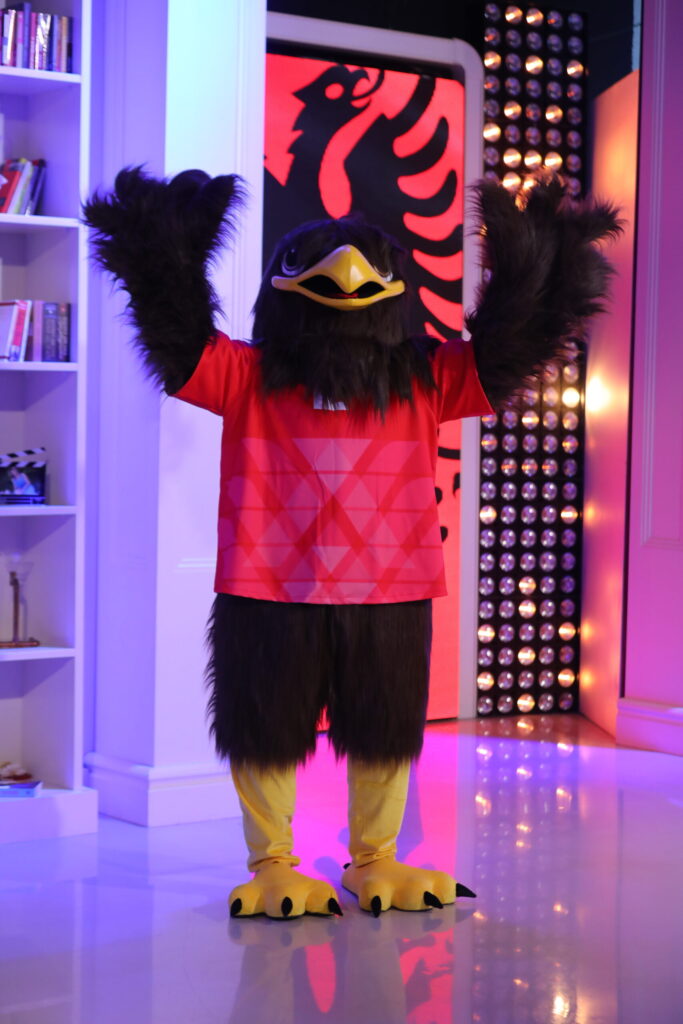
President Duka also mentioned the importance of events like the “Ballon d’Or 2024” in motivating and promoting Albanian football and spoke about the National Team’s mascot, “Alban.” Among other things, he shared his personal experience in business and his transition into sports, as well as his emotions about being a grandfather to two grandchildren.
Football in Albania Over the Years
“Many beautiful and good things have been done, and many more continue to be done. Football is the most beloved sport in the world, and in Albania, it is even more so. It is almost like a religion. This places even greater responsibilities on us to offer as much quality as possible. Of course, football, being a widely followed sport, has its fair share of criticism. But we always strive to do our best.”
Relationship with His Grandchildren
“I am a grandfather to two beautiful grandchildren, like every grandfather who thinks their grandchildren are the most beautiful. I became a grandfather through my daughter, Lori. My son has yet to experience this. The feeling of being a grandfather is different from that of being a father—perhaps because we are more mature now, while when we had our children, we were younger and somewhat ‘less responsible.’ Now, we enjoy these moments immensely.
There is a saying that grandchildren are ‘the honey of honey,’ but for me, they feel even more special. I love them deeply and often miss them since they do not live with me. I do not know if I am a good grandfather to them, but they are certainly wonderful grandchildren to me. I work hard to keep them connected to our homeland and culture, as they live outside Albania.
Surely, they will become football fans, and I hope they also play the sport. Since football is a common topic of discussion not only from me but also from their parents, I believe they will be interested in it. Whether they play professionally or just at an amateur level, I would be very happy.”
Would He Recommend Football to His Grandchildren?
“Football is a beautiful thing. I recommend it to my grandchildren and to all parents for their children because it is a form of education. If they become professional athletes and build a sports career, even better. But even for their health and discipline, football is an excellent way to educate children.
Especially nowadays, when electronic games, phones, and computers take up so much of children’s time. If we offer them a green field where they can play with their friends and enjoy themselves, it will be great for their upbringing. If my grandchildren engage in this, I will be very happy. Football is both health and education. If it turns into a profession, it becomes an added value for the child and their parents.”
Is It Easy to Be a Good Footballer?
“Football is a wonderful sport. Footballers have unique and admirable qualities if you get to know them closely. Team life and collective spirit make them more tolerant, better communicators, and overall good individuals.
Of course, there are challenges, and to become a high-level footballer, sacrifices are necessary. At an age when their peers go to clubs and enjoy nightlife, a footballer must maintain discipline and train. Football is both difficult and beautiful, and when one reaches high levels, it brings many benefits.”
Gala Night – “Ballon d’Or 2024”
“For about three years now, we have been organizing this event. Every community needs a grand celebration to mark the achievements of an entire year. We have established this annual event to honor the best performers of the year.
This year, we collaborated with Ardit Gjebrea, whom I would like to thank. It was my first time getting to know him closely, and he is a true professional who has helped us a lot. We are very good at organizing football matches and sports events—the entire FSHF staff is exceptional at this—but we are not experts at putting on spectacles.
Ardit and his team completed this aspect. This year’s event was significantly better than the previous ones, much more organized, more beautiful, and greatly enjoyed by our audience. The goal of this event was to thank those who have contributed to football in 2024, to motivate the winners, and to encourage others to strive for excellence next year.
Additionally, it serves as a means to promote our sport and invite more children to join football. The feedback from our community has been very positive, and we will continue to improve and expand this event, involving more people and raising the level further. We want to show the world that we not only play football but also know how to put on a show. Even our female footballers, when dressed in elegant gowns, look truly beautiful and remarkable.”
Women’s Football in Albania
“It has changed a lot. Our history in women’s football is not very long. We started late, in 2008, but now we have a large number of girls playing football. We have achieved positive results with clubs and national teams and have a well-organized national championship.
One of our greatest successes so far is with the Albanian champion team, Vllaznia, which participated in the Champions League against teams like Real Madrid, PSG, and Chelsea. It was a great experience for the girls involved.
The national team has also performed well in 2024, finishing first in their Nations League group. These are truly positive developments. The global objective is to bring women’s football to the same level as men’s in all aspects: participation numbers, rewards, training conditions, and organization. We are not there yet, so there is still a lot of work to do.
Jasir Asani’s Video Message
“Jasir has left an important mark and contributed significantly during the European qualifiers. His goals were not only beautiful but also crucial in securing our place in the European Championship. Through him, I extend my gratitude to Jasir and all the players.
I have thanked them before, and I will continue to thank them for life because they have given us emotions that cannot be experienced in any other way. You can be a businessman, accumulate wealth, do whatever you want, but the emotions they have given us—myself included, and many Albanians—cannot be compared.
In the 90s, many Albanians hesitated to openly say they were Albanian. Today, we say it with pride. A significant contribution to this transformation has been made by our national team. Participation in Euro 2016 and now securing a place in 2024 has cemented this. Seeing so many Albanian flags, songs, and celebrations from all Albanian regions is something we had never done before. For this, I want to thank our team and the entire FSHF staff.”
Alban – The National Team Mascot
“The idea of the mascot came from organizing the U-17 European Championship finals in Albania. The opening match is on May 19. To make the event more special, we introduced the mascot.
The name was chosen through a poll among Albanian fans. It wears the number 12, symbolizing the 12th player—the supporters of the team. Albanian fans are among the best in the world, as they have never stopped supporting the national team, regardless of results.
Albani, the eagle, is our national symbol. It is red and black, designed by an agency and approved by a committee. It represents the fans and their unwavering support. It will be present at our first match against Andorra on March 24 in the “Arena Kombëtare” for the World Cup qualifiers. Albani will also be part of the U-17 European Championship, a milestone event for Albanian football.”
So, will the mascot be with the young footballers for several years? – For this edition, it will certainly remain as it is. Perhaps in the next edition, there could be a redesign, but always staying true to Albania’s national symbols.
How much has Albanian football changed? – Honestly, the period has been long, and the developments have been significant. If I go back to my early days, the change is extraordinary. At that time, from every perspective, it was truly a modest federation. We should be grateful that, at the very least, it existed as a federation. The change has been remarkable.
Two days ago, we had a meeting, an analysis, and part of it was also the Secretary-General of that time, Sulejman Starova. I asked him: “How many people were in the federation back then?” He said 12. 12 people with a very modest budget, and today we are 180, with a budget more than 1000 times bigger.
During this period, international events had never been held in Albania. Just last year, we organized 13 European international events in Albania, each with four teams. So, over 30 European teams participated in these events. We will do the same in 2025. Thanks to experience, the trust of European institutions, and the positioning of the Football Federation in that institution, Albania has been entrusted with organizing the European Championship for U-17s in 2025 and the U-21 European Championship in 2027.
These are some of the changes that have happened in Albanian football over this time. But listing them all would take more than just this program. This work continues, and not just in football but in every field of life. The higher you go, the harder it gets. The higher you set the bar, the harder it is to surpass it. Now, the challenges are even greater.
If, during this period, the development steps were large because the starting point was very basic, now, to make qualitative improvements, we need even more expertise and professionalism. It is more difficult because we are trying to compete with the developed countries of Europe. Now, we are dissatisfied and have strong criticism when we lose a match against Ukraine, whereas in the past, we were happy if we managed to get a single point.
Have expectations increased? – Besides all our objectives, in my mind and in the minds of the entire Federation staff, the main goal is to have as many people as possible playing football. To achieve this, you need to create the right conditions, and we have them—maybe even better than many countries in the region. We have some things that perhaps no other federation in the world has.
A child who wants to play football is given everything—uniforms, balls, and even training fields for young ages, which we pay for so that we can get as many children involved in football as possible. This has shown results, and we will continue to do so. Our goal is to involve even more girls, as I mentioned, to organize things better, and to improve infrastructure. If we look at a match from the year 2000, the difference is enormous. We need an even greater inventory because if we increase the number of children, we need to increase the number of fields.
Here, we are not very successful—not due to lack of support or financing from our side. We have a project called “100 Fields,” which provides funding to individuals, clubs, or municipalities that have space. But we lack these spaces, especially in Tirana, where the population is very large. Just last year, we built 10 football fields, but we need even more.
To achieve this, you need an example, and the example is the players of the National Team. When children see results and enjoy watching the National Team play, they become more engaged in football.
I have a friend who emigrated to America, and his two sons did not speak Albanian. I was very critical of him, asking how he could let his children grow up without speaking Albanian. They came to Germany to watch the National Team play, and from the moment they were in Germany, they started speaking Albanian and coming to Albania. This is what an important event like the European Championship and the National Team can do.
Now, we have a goal, and we want to achieve something big. We know it is difficult to qualify for the World Cup. We have England in our group—the cradle of football, which is also in great form—we have Serbia, Latvia, Andorra. But why not? We will try. If we achieve this, we will all be very happy. The boys and the entire football community have set the bar high, and now it is difficult to surpass it, but we will attempt it.
Hard work, year after year, to reach where we are today… – Nothing in life happens by chance. Those who think so are mistaken.
The video message from coach Silvinho to the President – Silvinho is the leader of the team and the success of 2024. He is a very correct and dedicated person. He is a coach who lives in Albania, unlike other foreign coaches we have had. He works 24 hours a day. For him, for the team, the results did not come by chance. He, his staff, and we all dream about the World Cup. They are working very hard for this, and I hope we achieve it.
You started as an economist? – And I still am. This sense of economics, this knowledge from school and work, has helped me because management needs economic sense. My initiative in the ’90s to start a business—I don’t know if it was influenced by being an economist. If I wasn’t the first in Albania, I was among the top ten to do it.
I am the child of two teachers. In 1991, when I started my business, the business at the time was purely trade—buying and selling. My mother was upset and told me: “You can’t do this because you’re not a profiteer, someone who buys cheap and sells expensive.” She considered it disgraceful, calling it profiteering. The early years were very difficult, even harder in 1997. Through those battles, we grew and perhaps became stronger—not just me but everyone who took the initiative to start a business because the ’90s were incredibly difficult.
In 1993, when we founded Aiba and bought a state-owned company that produced livestock feed, it was the first state company in Albania to be purchased by a private entity. I didn’t want to do it at first—my brother insisted on buying it. I was afraid, thinking back to 1944 when people had their businesses taken away, were tortured, and imprisoned. But my brother convinced me that things had changed, that we were now in a different system—capitalism. And, thanks to God, things continued in that direction, and here we are today.
How did you get into football? – My connection to football was through business. We have been a sports-oriented family—my father was a footballer and coach, my brother was a volleyball player for over 20 years with Erzeni. After he retired from volleyball, we sponsored and managed Erzeni’s volleyball team for a while. Later, through business, we got involved with Erzeni and Teuta, and I became part of the sports community.
At that time, the Football Federation was proposed to me by the former president of Vllaznia, my friend Myftar Çela, who is no longer with us. He saw my management skills in business and said: “Why don’t you become the President of the Football Federation?” I didn’t campaign for it or struggle to become president because, honestly, no one really wanted that job. I didn’t realize then how demanding it would be or how long it would last.
Now, when I meet new club presidents like Gaz Demi, who took over Partizani, I tell them: “Once you enter football, it’s hard to leave.” The emotions that football gives you are difficult to find elsewhere.
Since 2023, you have been UEFA Vice President and Chairman of the Media Commission. What about becoming UEFA President? – I have no ambition to be UEFA President. But Albania’s position in European football has changed. In 2002, when I became President of the Football Federation, my colleagues there, the Executive Committee—I’m not even sure if they would shake my hand. Today, the FSHF is represented in UEFA with over 20 people in various committees.
Our referees officiate group-stage matches in the Conference League and Europa League. We have five delegates in Champions League matches, referee observers, and the UEFA Vice President. This is a great representation for Albania—not just for the benefits but for the experiences and the opportunity to organize even greater things.
A message for the youth – My message is for parents: Trust and encourage your children to play football. We are ready to give our maximum. We have the expertise, the conditions, and great projects. All it takes is your push—children’s passion is already there because everyone loves football. Let’s raise healthier children through sports.
CREATED by:
“KORÇA BOOM”


