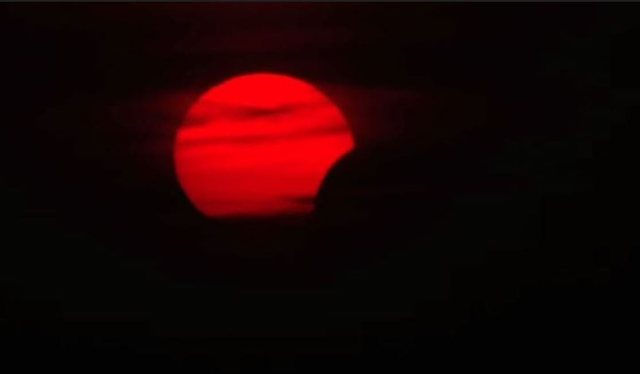
STUDY / “Nature Communications”: Summer could last up to half the year in the future
Summer is getting longer and more intense, with studies warning of serious consequences for climate and agriculture.
A study published in the scientific journal “Nature Communications” shows that summer globally is starting earlier and lasting longer than in the past, a development directly linked to climate change.
According to research conducted by scientists from the Chinese Academy of Sciences, the average summer period in regions between the tropics and the poles has extended by about six days per decade between 1990 and 2023.
This rate is higher than previous estimates, which suggested an extension of around four days per decade.
The phenomenon is not uniform across the globe.
In major cities, the impact is even more pronounced due to the “urban heat island” effect.
For example, in Sydney, summer now lasts about 130 days, compared to only 80 days in 1990 — an increase of roughly 15 days per decade.
Researchers also highlight that transitional seasons are significantly shrinking.
The shift from spring to summer and from summer to autumn is becoming faster and more abrupt.
This change is affecting ecosystems, disrupting the synchronization between plant flowering and pollinator activity, and limiting the time available for agricultural planting.
Another concerning finding relates to the amount of heat accumulated during summer.
According to the study, in the Northern Hemisphere this amount has tripled compared to 1990, increasing the risk of more frequent and extreme heatwaves.
Other data from the Intergovernmental Panel on Climate Change confirm this trend, noting that the last decade has been the hottest ever recorded.
Meanwhile, the World Meteorological Organization reports a significant rise in global average temperatures and extreme events such as droughts and wildfires in recent years.
Experts warn that if greenhouse gas emissions are not significantly reduced, summer could last up to six months by the end of the century, bringing major consequences for public health, food supply, and water resources.
This development reinforces the need for urgent global action to slow climate change and adapt to a new reality where the traditional balance of seasons is being disrupted.
“KORÇA BOOM”