Christmas, December 25 that unites the world: History, meaning, and the message of peace
- Dec 25, 2025
- 2 min read
Christmas is one of the most important and beloved holidays in the Christian world, bringing together millions of believers around a universal message of peace, love, and hope. It is celebrated every year on December 25 by the majority of Christians, while in some Eastern churches the celebration takes place on January 7, due to the use of the Julian calendar. After Easter, Christmas is considered the greatest and most meaningful feast for Christian believers.
The importance of this holiday was strengthened gradually throughout history, especially after the year 800, when Charlemagne was crowned emperor on Christmas Day, giving this date a particular historical and political significance in medieval Europe.
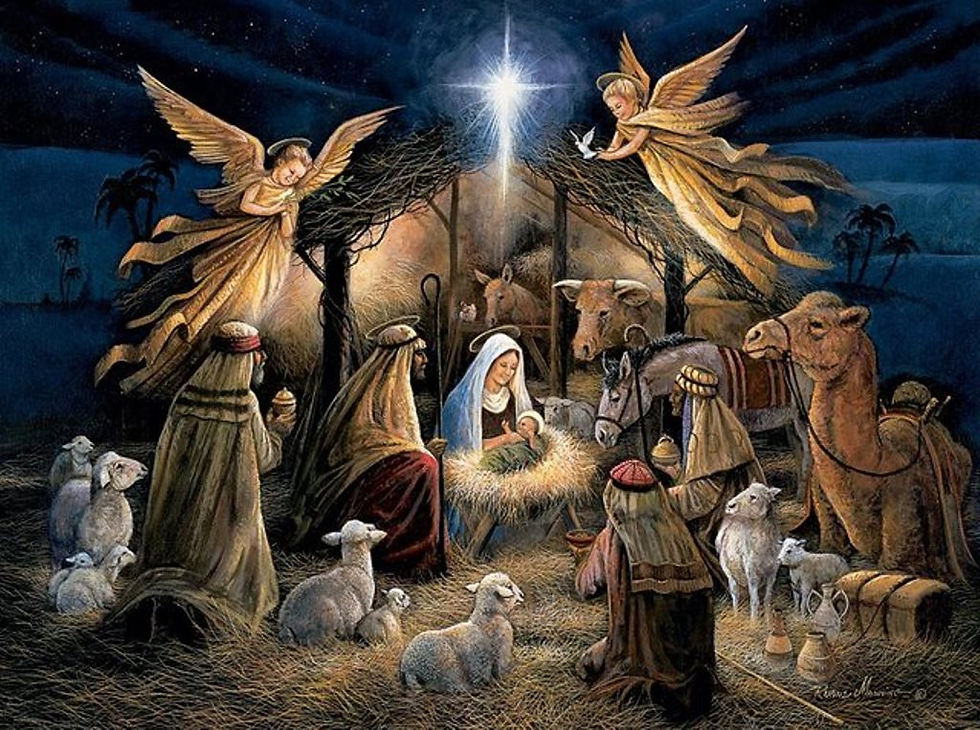
Today, Christmas is accompanied by well-known traditions around the world, such as setting up the Nativity scene, decorating the Christmas tree, exchanging gifts and greeting cards, and gathering the family around the festive table. In many countries, the holiday is also associated with the figure of Saint Nicholas or Santa Claus, a symbol of generosity and joy, especially for children.
Christmas conveys powerful messages of peace, forgiveness, solidarity, and love among people.
For believers, it has a special spiritual and family significance, as the birth of Jesus Christ took place within his family, placing the family at the center of the symbolism of this holiday.
This feast commemorates the birth of Jesus Christ, who according to Christian belief is the Son of God, incarnate for the salvation of humanity. According to the Gospels of Luke and Matthew, Jesus was born to the Virgin Mary in Bethlehem, where Mary and Joseph were present due to a population census ordered by the Roman Emperor Augustus. The birth of Christ, according to belief, had been foretold by numerous prophecies announcing the coming of the Messiah from the house of David.
Although the exact date of Jesus’ birth is not mentioned in the New Testament, December 25 has traditionally been accepted as Christmas Day by most Christian churches. Over time, this date has become a universal symbol of hope and peace, celebrated also as a cultural and social event in many parts of the world.
In the Catholic Church and in most Orthodox churches that use the Gregorian calendar, including the Autocephalous Orthodox Church of Albania, Christmas is celebrated on December 25. Meanwhile, some Orthodox churches that follow the Julian calendar celebrate the feast on January 7.
Despite these calendar differences, the message of Christmas remains the same for everyone: peace among people, love, and faith in a better world.
“KORÇA BOOM”